
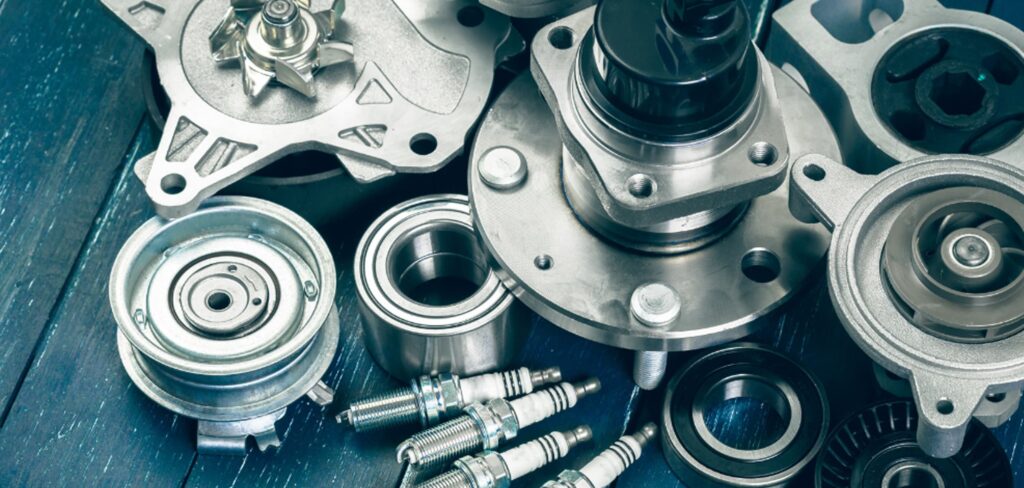
In industrial operations, one wrong spare part can do more damage than many people realise. A fake bearing, seal, motor component, valve, belt, coupling, electrical part, or lubrication product may look harmless at the point of purchase. It may even come in packaging that looks original. But once it enters your machine, the real cost begins: unexpected breakdowns, production delays, equipment damage, safety risks, repeated repairs, and wasted maintenance budgets.
For factories, processing plants, engineering teams, and procurement departments, counterfeit industrial spare parts are not just a purchasing problem, they are an operational risk.
The mistake many companies make is assuming that fake parts are always easy to spot. They expect counterfeit products to look rough, poorly packaged, badly printed, or unusually cheap. That assumption is dangerous. Many counterfeit parts are now packaged to closely imitate genuine products, making visual inspection alone unreliable. This is why every industrial buyer, maintenance engineer, and plant manager needs a clear process for identifying suspicious spare parts before installation.
1. Check the Source Before You Check the Part
The first warning sign is often not on the product. It is in the supply chain.A genuine industrial component should come through a reliable, traceable, and technically competent supplier. If the supplier cannot explain the origin of the part, provide proper documentation, or respond to technical questions, that is already a red flag.
Before buying, ask:
- Is the supplier known and verifiable?
- Can they identify the manufacturer or approved source?
- Do they understand the application of the part?
- Can they provide support if the part fails?
- Is there a warranty or return process?
A supplier who only focuses on price without technical clarity may expose your equipment to serious risk. In industrial procurement, cheap is not always economical. A low-cost fake part can damage a machine worth millions.
2. Be Suspicious of Prices That Look Too Good
One of the easiest ways counterfeit parts enter a company is through unrealistic pricing. If a spare part is significantly cheaper than the normal market price, the buyer should pause. It may be old stock, refurbished stock, wrongly sourced stock, or a counterfeit product presented as original. This does not mean every affordable part is fake. But when the price is far below normal expectations, procurement should ask harder questions.
A proper evaluation should consider:
- Market price range
- Product origin
- Supplier reputation
- Availability timeline
- Warranty terms
- Documentation
- Technical suitability
A fake part often looks like a saving at first. But when it causes downtime, damages related components, or creates safety hazards, the actual cost becomes much higher.
3. Inspect the Packaging Carefully
Packaging is not enough to prove authenticity, but it can still expose warning signs.
Check for:
- Poor print quality
- Spelling errors
- Wrong logo placement
- Inconsistent colours
- Weak carton quality
- Missing manufacturer details
- Blurred barcodes or QR codes
- Labels that look tampered with
- Unusual packaging design
- Missing batch or serial information
However, do not rely only on packaging. Some counterfeiters copy original packaging very closely. A package can look correct while the product inside is fake. Packaging inspection should be the first step, not the final proof.
4. Verify Serial Numbers, QR Codes, and Security Labels
Many genuine industrial products now carry serial numbers, QR codes, DMC codes, holograms, batch numbers, or security labels. These details help manufacturers trace the product and confirm authenticity.
Before installing a critical part, check whether the product code can be verified. Where applicable, use official manufacturer verification tools, mobile apps, distributor platforms, or direct manufacturer confirmation. If the code is missing, duplicated, unreadable, or does not match the expected product details, do not install the part until it is verified.
This is especially important for critical components such as:
- Bearings
- Electrical control components
- Motors
- Gear drives
- Seals
- Valves
- Pumps
- Automation components
- Power transmission parts
- Fluid control components
A serious procurement process should not end at “the supplier said it is original.” The part must be traceable.
5. Watch Out for “Available Everywhere” Critical Parts
Some parts are naturally scarce, specialised, imported, or tied to specific OEM specifications. If a supplier suddenly claims to have unlimited stock of a hard-to-find part at a very low price, be careful. Counterfeit products often enter the market when buyers are under pressure. For example, when a machine breaks down and the plant urgently needs a replacement part, procurement may rush the process. That urgency creates room for poor sourcing decisions. The more urgent the requirement, the stricter the verification should be. Emergency buying is one of the easiest ways to bring fake parts into a production environment.
6. Involve Maintenance and Engineering Teams Before Purchase
Procurement should not buy technical spare parts in isolation. A spare part may look correct on paper but fail in actual application because the specification is wrong, the load rating is unsuitable, the material is poor, or the operating condition was not considered.
Before buying critical parts, involve:
- Maintenance engineers
- Plant engineers
- Reliability teams
- Operations managers
- OEM support, where necessary
- Trusted MRO specialists
This reduces the risk of wrong purchases and counterfeit substitutions. A buyer may focus on price and delivery. An engineer will ask whether the part can survive the operating environment. Both views are important.
7. Test Critical Parts Before Full Installation
For high-risk components, inspection should not stop at the warehouse. Depending on the part, companies may need to carry out:
- Dimensional checks
- Electrical testing
- Material inspection
- Fit-up checks
- Rotation checks
- Pressure checks
- Visual inspection under better lighting
- Technical review against datasheet
- Trial installation under controlled conditions
This is especially important for parts used in high-speed, high-load, high-temperature, or safety-sensitive applications. A counterfeit part may pass a basic visual check but fail under real operating conditions.
8. Track Performance After Installation
Counterfeit parts often reveal themselves through poor performance. After installation, monitor for early warning signs such as:
- Unusual vibration
- Excessive heat
- Strange noise
- Leakage
- Repeated tripping
- Rapid wear
- Poor alignment
- Reduced efficiency
- Short service life
- Frequent breakdown after replacement
If a newly installed component fails unusually fast, do not just replace it again. Investigate the source, authenticity, specification, installation process, and operating condition. Repeated failure is not always a machine problem. Sometimes, it is a spare parts problem.
9. Build an Approved Supplier List
One of the best ways to reduce counterfeit risk is to stop buying from random sources. Every industrial company should have an approved supplier list for critical spare parts. The list should be reviewed regularly based on:
- Product quality
- Delivery reliability
- Technical support
- Documentation quality
- Warranty response
- Traceability
- Past performance
- Industry reputation
This protects the company from panic buying and unverified vendors. A proper supplier system is not bureaucracy. It is equipment protection.
10. Create a Critical Spare Parts Register
Factories should identify parts that can shut down production if they fail.
These may include:
- Bearings
- Belts
- Motors
- Gearboxes
- Pumps
- Seals
- Sensors
- Valves
- Couplings
- Electrical control components
- Lubrication products
- Power transmission components
Once identified, the company should define minimum stock levels, approved brands, approved suppliers, expected lead times, and verification procedures. This reduces the need for emergency purchases, which is where counterfeit risk becomes higher.
Bonus: Do Not Install Suspicious Parts “Just to Manage”
This is where many companies deceive themselves. A part looks suspicious, the documentation is weak, the packaging is questionable, the price is unusually low, and the supplier is not clear. But because production is under pressure, someone says, “Let us just use it for now.” That decision can be expensive. A suspicious part should be quarantined, verified, or rejected. Installing it into a machine transfers the risk from procurement to production, maintenance, safety, and management. If the part fails, the machine does not care that the company was trying to save money.
Conclusion
Counterfeit industrial spare parts are dangerous because they often look convincing until they fail. The safest approach is not to depend on appearance alone.The right part keeps production moving. The wrong part can damage equipment, waste money, endanger workers, and shut down operations.
At Crestpart Nigeria Limited, we understand the importance of reliable MRO support, OEM spare parts, and quality industrial components. Our goal is to help industrial teams reduce downtime, protect equipment, and source the right components for their applications.
Before you install that next spare part, ask one important question: Is it truly genuine, or is it only packaged to look genuine?